Toronto Pearson winter travel comes with one step that summer flights skip: de-icing. If you fly out of Toronto Pearson (YYZ) between November and March, plan for it to add roughly 15 to 45 minutes to your departure. And learn this before a storm hits: when snow or freezing rain cancels your flight, it counts as weather, not an airline failure. That means rebooking or a refund, but no cash compensation and no paid hotel. The figures and rules below were checked in July 2026 against the Greater Toronto Airports Authority (GTAA) and the Canadian Transportation Agency (CTA).
Winter is the one season where a Pearson departure behaves differently from the rest of the year. Two things drive that: the de-icing step summer flights never see, and a passenger-rights rulebook that treats weather unlike every other cause of delay. Most guides cover one or the other. This one connects both, so you know what to expect on the tarmac and what to ask for at the counter.
How much time does de-icing add at Toronto Pearson?
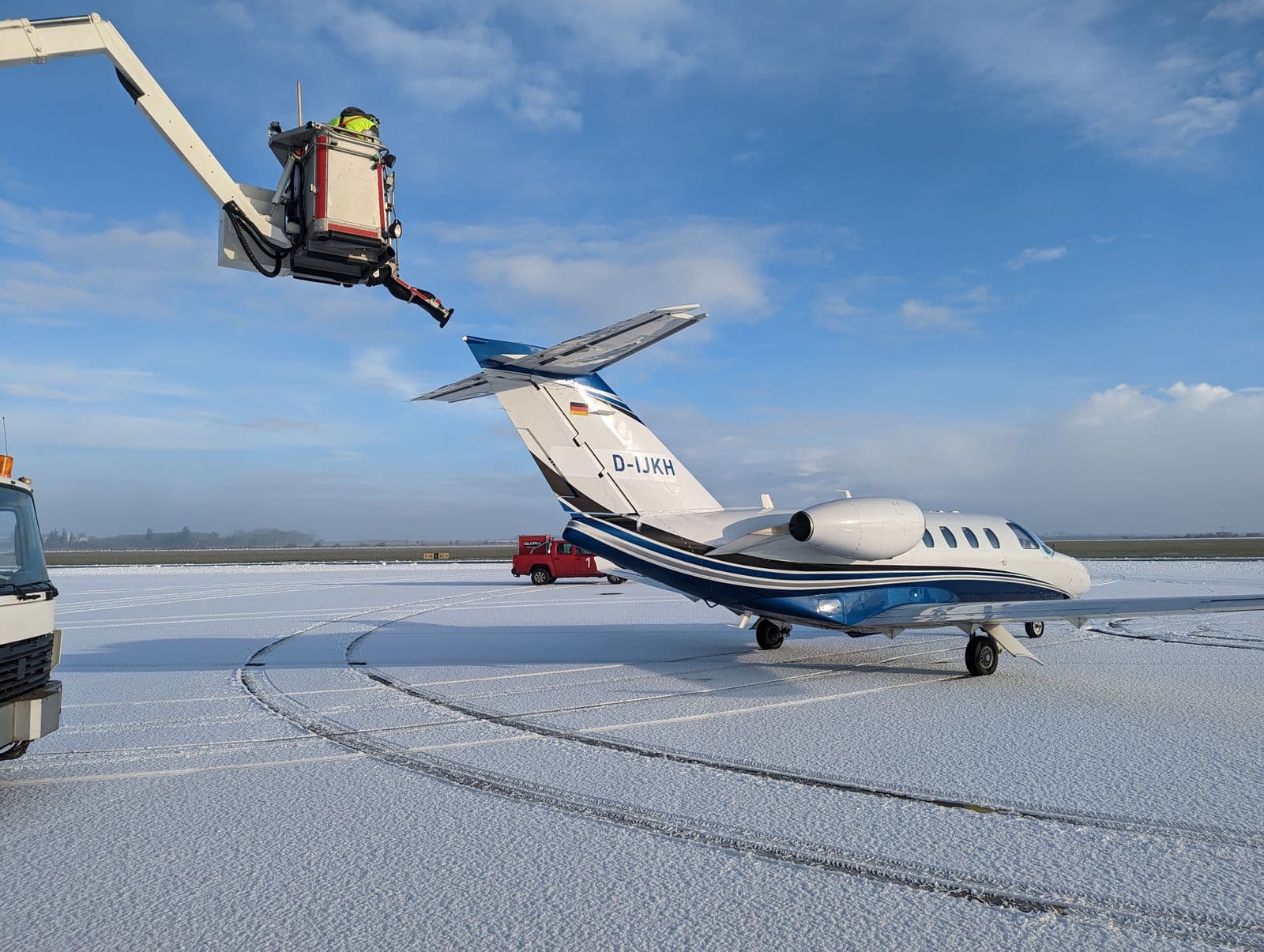
The spray itself is quick; the queue is what costs you time. Toronto Pearson runs the Central De-icing Facility, the largest of its kind in the world, with six bays across about 24 hectares (60 acres) that treat up to 12 aircraft at once. The GTAA reports that each aircraft takes between 2 and 19 minutes to de-ice, depending on the weather and the size of the plane. In a typical winter the facility handles more than 10,000 aircraft, and a record season topped 17,000.
So why the 15-to-45-minute rule of thumb? Your plane pushes back from the gate, taxis to the facility, and often waits for an open bay during heavy snow. That wait, not the spray, is the real delay. There is also a hidden clock. Anti-icing fluid protects the wings for a limited "holdover time," and if a long takeoff queue outlasts that window, the aircraft must return for a second treatment. That is how a 20-minute delay quietly becomes 90.
Transport Canada's "clean aircraft" rule is why none of this is optional. A plane cannot legally take off with frost, snow, or ice on its wings, because contamination disrupts the airflow that creates lift. De-icing is a safety step, not a courtesy, which is why airlines hold a flight for it rather than skip it.
Why do flights get delayed or cancelled at Pearson during a storm?
Winter disruption at YYZ comes from four predictable causes, and knowing which one you face tells you what happens next. Snowstorms slow everything because runways need plowing and de-icing queues build. Freezing rain is worse than snow: it coats aircraft and ramps in ice and can halt operations outright. Deep cold strains ground equipment and fuel handling. Poor visibility forces air traffic control to widen the spacing between aircraft, which cuts how many flights the airport can push out each hour.
The cause matters because it decides your rights. A snowstorm or ice event is weather, and no airline can be blamed for a storm. A crew that "times out" waiting through that storm, though, can shift the cause back onto the carrier. When a big system is forecast, Air Canada and WestJet usually post a travel advisory a day ahead and waive change fees, which is the airport's clearest signal that trouble is coming.
Delay vs. cancellation: what is the difference for you?
They sound alike but trigger different obligations. Use this table to see where you stand before you join the line at the counter.
| Delay of 3 hours or more | Cancellation | |
|---|---|---|
| Your booking | Stays valid; departure is pushed back | Voided; the airline must rebook or refund you |
| First move | Wait for the updated boarding time; keep receipts | Ask to be rebooked on the next available flight |
| Refund option | Only when the delay makes the trip pointless | Yes, if you are not rebooked within 48 hours |
| Compensation | Only if the airline is at fault | Only for airline-caused disruptions |
The single most useful thing to pin down is the cause the airline logs, because that one word decides whether money is on the table at all.
How do I check my flight status during a winter storm?
Check the airline first, the airport second, and a tracker third. Your airline's app is the only source that can actually rebook you, and it usually shows a cancellation before the departure board does. The official Toronto Pearson departures board and arrivals board give the best read on how the whole airport is coping. Independent trackers such as FlightAware help you see whether your inbound aircraft is even on its way, which often predicts a delay the airline has not announced yet.
Set an airline notification the night before a forecast storm, and screenshot your booking. If the flight is cancelled, rebook inside the app right away instead of queuing, then join the phone line as a backup. On a bad-weather day, the fastest travelers are the ones already holding a new seat before they reach an agent.
My flight was cancelled in a storm. What am I owed?
Under Canada's Air Passenger Protection Regulations, a winter storm counts as weather the carrier cannot control, so you are owed rebooking or a refund, but not compensation and not meals or a hotel. The CTA sorts every disruption into three buckets, and only the first pays out. This is the table worth saving.
| Cause of disruption | Inconvenience compensation | Meals / hotel (care) | Rebooking and refund |
|---|---|---|---|
| The airline's own fault (e.g., staffing) | Yes: CAD 400 / 700 / 1,000 (large airline) or 125 / 250 / 500 (small), by arrival delay of 3-6 / 6-9 / 9+ hours | Yes | Free rebooking; refund if you decline |
| Safety-related but still on the airline | No | Yes | Free rebooking; refund if you decline |
| Beyond the airline (winter storm, weather de-icing backlog) | No | No | Rebooking on the next available flight; refund if not rebooked within 48 hours |
Two rules protect you even in the weather bucket. A large airline that cannot get you on its own flight within 9 hours must book you onto any other carrier. And if no one can get you moving within 48 hours, you are owed a refund, even on a non-refundable fare. You have one year from the disruption to file a claim in writing, and the airline has 30 days to respond. For the full breakdown of amounts and how to file, see our guide to flight delays and compensation at Toronto Pearson.
What can you do to dodge winter delays at YYZ?
There is no beating the weather, but you can stack the odds. Book the first flight of the day: it starts with an aircraft that overnighted at the airport, so it dodges the delay cascade that builds as the hours pass. Give yourself a wider connection buffer than usual, because de-icing eats the tight ones first. If the airline posts a travel advisory, use the free change to move to a calmer day rather than gambling on the storm.
At the airport, clear security early so a de-icing delay does not stack on top of a rushed screening line. For a long wait, our layover guide and the terminal map show where to settle in comfortably. And if the train is your ride in, note that the UP Express keeps its own schedule through most winter weather, unlike road transfers that crawl in snow.
How we checked
The figures here were verified in July 2026. De-icing facility details (six bays, 2 to 19 minutes per aircraft, more than 10,000 aircraft per winter) come from the Greater Toronto Airports Authority. The three-category rights framework, the compensation amounts (CAD 400/700/1,000 for large airlines, 125/250/500 for small), the 48-hour rebooking rule, and the one-year claim window come from the Canadian Transportation Agency's Air Passenger Protection Regulations, current as of July 2026. Airline travel-advisory practice was checked against Air Canada's published flight-disruption policy. We did not time delays ourselves; the ranges describe typical, not guaranteed, conditions.
Sources: Toronto Pearson aircraft de-icing, Canadian Transportation Agency flight delays and cancellations, Air Canada flight disruptions.