If your flight arrives 3 or more hours late for a reason the airline controls, Canada's Air Passenger Protection Regulations (APPR) entitle you to CAD 125 to 1,000 in compensation. Weather pays nothing, but the airline still has to rebook you, and refund you if it cannot get you moving within 48 hours. At Toronto Pearson (YYZ) two things matter in the first ten minutes: get the reason for the disruption in writing, and get into the rebooking queue, app first, counter second. Below are the exact amounts, the weather exception most passengers get wrong, and where to go inside the terminal. All figures checked July 2026.
How much is flight delay compensation in Canada?
The amount depends on two things: how late you arrive at your destination and the airline's size. Large carriers such as Air Canada and WestJet pay CAD 400 to 1,000. Small carriers pay CAD 125 to 500.
| Arrival delay | Large carrier | Small carrier |
|---|---|---|
| 3 to 6 hours | CAD 400 | CAD 125 |
| 6 to 9 hours | CAD 700 | CAD 250 |
| 9 hours or more | CAD 1,000 | CAD 500 |
Three conditions apply. The disruption must be within the airline's control and not safety-related, you must have been notified 14 days or less before departure, and the delay is measured at arrival, not departure. The test is simple: if you left Pearson late but the crew made up time and you landed under 3 hours behind schedule, no compensation is due. Full rules are on the official Air Passenger Protection site.
Do weather delays at Pearson qualify for compensation?
No. Disruptions outside the airline's control, including storms, extreme heat, air traffic control holds and security events, pay zero under APPR. The airline does not owe you meals or a hotel in these cases either. What it still owes: a seat on the next available flight, including one operated by a competitor if its own next departure is more than 48 hours out, or a full refund if you choose not to travel. So when the airline blames weather, skip the compensation argument and put your energy into securing the earliest rebooking. Ask for the reason in writing through the app or by email. Airlines sometimes label a crew shortage as weather, and a written notice is what lets you dispute the category with the Canadian Transportation Agency later.
What should you do first when your flight is cancelled at YYZ?
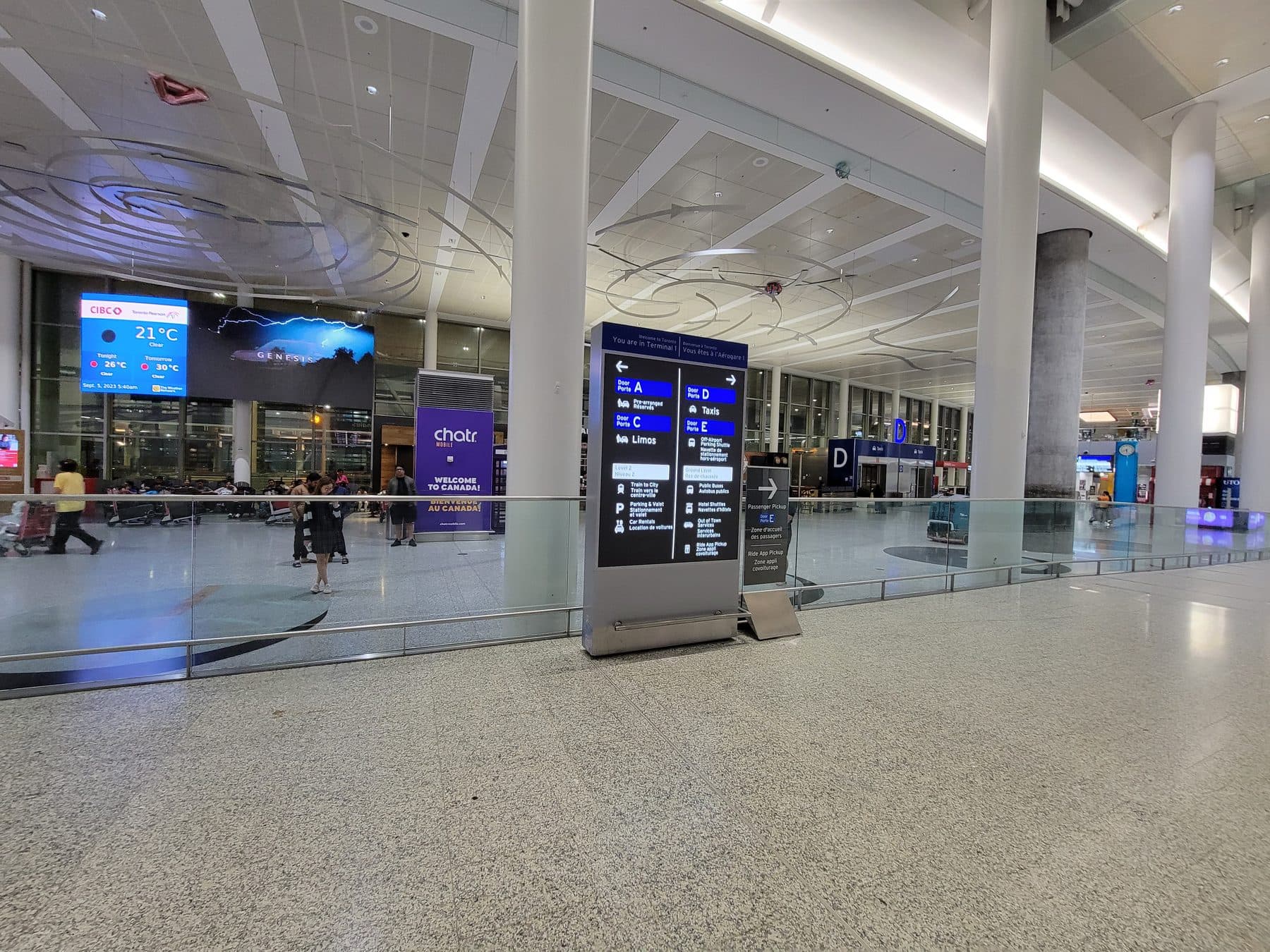
Rebook in the airline's app before you join any line. The app processes changes faster than counters, and seats on the next flight go to whoever confirms first. If you need an agent, go to your carrier's terminal: Air Canada operates from Terminal 1, while WestJet, Delta, American, British Airways and Flair use Terminal 3. Not sure which one? Check our airline terminal guide. Three more moves that pay off: stay airside if your new flight leaves the same day, since re-clearing security can cost 20 to 40 minutes; screenshot the delay notice with its stated reason; keep every receipt. Live status for all departures is on our Toronto Pearson departures page.
When can you take a refund instead of rebooking?
Two routes lead to a refund. First, for disruptions within the airline's control, a delay of 3 hours or more gives you the right to refuse the proposed rebooking and get your money back for the unused portion of the ticket. Second, for any disruption, weather included, a refund becomes mandatory when the airline cannot put you on a flight departing within 48 hours of your original time. The refund goes to the original payment method, not vouchers, unless you accept a voucher of higher value in writing. Take the refund when you can buy a replacement fare for less than the wait costs you; keep the rebooking when summer loads are high, because last-minute replacement fares out of Pearson in July often cost more than the refund returns.
What must the airline provide while you wait?
For disruptions within the airline's control, standards of treatment start at the 2-hour mark: food and drink in reasonable quantity plus access to communication. When the delay stretches overnight, the airline must offer a hotel and transport to it. For weather and other outside-control events, none of this is required, so budget for your own meals. One rule saves real money here: when a within-control disruption strands you overnight, ask the airline for the hotel voucher before booking anything yourself, because self-booked rooms are reimbursed only when the carrier failed to offer one. If you end up covering the night on your own dime, the Sheraton Gateway sits inside Terminal 3, and we compare it with the airport-strip options in our guide to sleeping at Toronto Pearson.
How do you file an APPR claim?
File directly with the airline, in writing, within one year of the flight. Every carrier has a compensation web form; attach your booking reference, the disruption notice and receipts. The airline then has 30 days to pay or to explain why it refuses. If the refusal cites weather or safety and your evidence says otherwise, escalate to the Canadian Transportation Agency, which handles complaints free of charge. Skip the commercial claim agencies for a straightforward Canadian claim: they keep 25 to 50 percent of the payout for filing the same form you can submit in fifteen minutes. Paperwork that wins cases: boarding pass, the written reason for the disruption, timestamps of the actual departure and arrival, and photos of the departures board.
Are Canada's air passenger rules about to change?
Yes, and in passengers' favour. Amendments published in the Canada Gazette in December 2024 would scrap the three disruption categories entirely: airlines would owe compensation for any disruption unless they prove exceptional circumstances, with the burden of proof on the carrier, and assistance obligations would start at 2 hours regardless of cause. As of our July 2026 check the amendments had not yet come into force, so the table above reflects what applies to your flight today. This page is updated when the rules change, so the figures you see here match the regulations in effect. Until then, the practical difference remains: within-control disruptions pay cash, weather does not, and the 48-hour rebooking-or-refund rule protects you in both cases.